 by
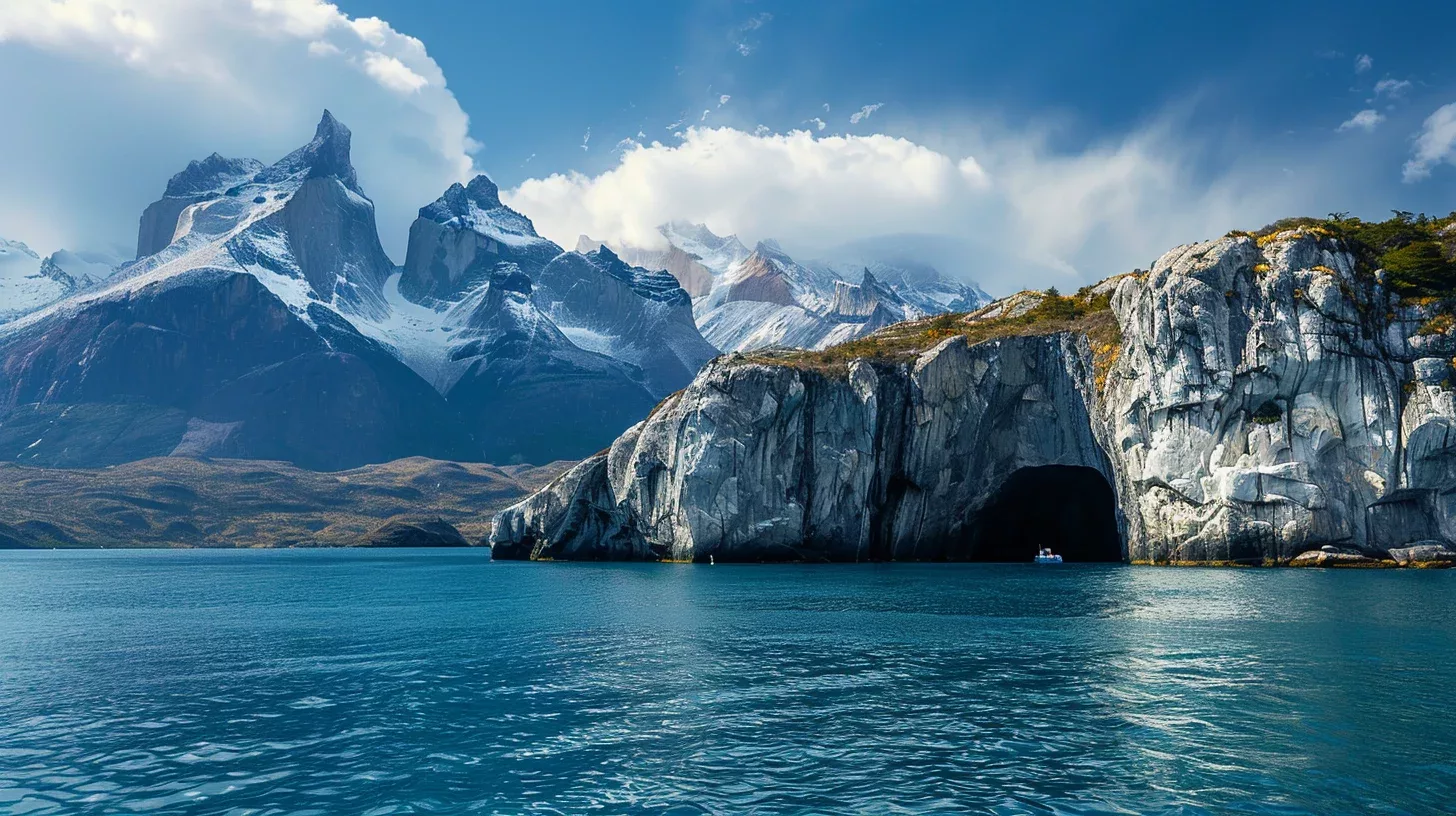
by Did you know the Marble Caves in Patagonia, Chile, are over 6,200 years old? They are a natural wonder with beautiful marble formations. Located in the stunning Lake General Carrera, they offer a unique caving adventure.
The caves are tucked away in the vast Patagonian wilderness. You can only get there by boat, which makes the trip even more special. They’ve become a big attraction for explorers and nature lovers who want to see nature’s artwork.
It’s important to keep the Marble Caves safe and unspoiled. By visiting them in a careful way, we can ensure they stay amazing. This allows future travellers to enjoy these caves too.
Introduction to the Marble Caves
The Marble Caves are a stunning natural wonder in the Patagonian Andes. They’re known for their brilliant patterns, shaped over thousands of years by marble and clear glacial waters.
Near the calm Lake General Carrera, the caves show how nature can create artwork. For hundreds of years, glaciers have carved beautiful labyrinths into the marble. These caves change reflections and lighting, offering a unique sight every visit.
The glacial lakes next to the caves make them even more breathtaking. They showcase a stunning mix of blue waters and marble swirls. Protecting this place is crucial. It ensures that this natural artwork remains for others to see in the future.
| Aspect | Detail |
|---|---|
| Location | Patagonian Andes, near Lake General Carrera |
| Formation | Carved by glacial water over millennia |
| Unique Feature | Striking marble formations mirrored in glacial lakes |
| Future Conservation | Essential to maintain the natural wonder for generations |
Location and Access
The Marble Caves in Chile sit by Lake General Carrera’s peaceful shores. They’re an awe-inspiring natural wonder, hidden away from the busy world. To get there, you need to travel by boat, making the journey an adventure itself.
How to Get There
To visit, head to Puerto Rio Tranquilo, a small town by the lake. You can drive or take a bus from bigger Patagonian cities. Once there, you catch a boat tour that brings you up close to the stunning caves.
Boat-only access keeps the area around Lake General Carrera untouched. The marble caves, shaped by nature for thousands of years, are a sight to behold. Their remote beauty provides a one-of-a-kind experience for every visitor.
When going on this adventure, remember to respect nature. Keeping Lake General Carrera and its surroundings safe is vital. Both tour guides and visitors must follow environment-friendly practices. This ensures the Marble Caves stay beautiful and untouched for all to see in the future.
Formation and Geology
The Marble Caves, or Cuevas de Mármol, were shaped over more than 6,000 years. This was due to water interacting with calcium carbonate. The nearby Lake General Carrera also played a huge role in their formation through constant erosion.

Geological Significance
What’s special about the Marble Caves is their composition and how they formed. Erosion over time revealed their crystalline marble walls. These walls, combined with varying water levels, show off a mix of colors. This makes the caves fascinating both for scientists and visitors.
Color Variations
The Cuevas de Mármol are famous for their changing colors. Light hitting the marble creates blues, turquoises, and indigos. The colors shift with the sun’s position and the lake’s water levels. This creates a living painting that wows all who see it.
To keep the Marble Caves’ beauty, conservation is key. Visitors are urged to follow sustainable tourism practices. This helps protect the swirling blues and crystalline marble walls. We aim to preserve them for future generations to enjoy.
Best Time to Visit
The best months to see the Marble Caves in Chile are from September to February. The melting glaciers make the turquoise waters look stunning. It’s a perfect addition to any travel plan.
This period is spring and summer in the southern hemisphere. The weather is great, and the views are the most colorful.
The optimal time to witness the Marble Caves in their full splendor is from September to February, coinciding with glacial melt and producing the most enchanting turquoise waters – a crucial detail for travel planning.
Planning a trip during these months is a smart move. You’ll see an incredible mix of light and color. The Marble Caves are famous for this natural beauty.
It’s also vital to support conservation efforts in such pristine places. Sustainable tourism helps protect the Marble Caves’ beauty. Everyone visiting should respect the environment. This way, the caves stay beautiful for years to come.
Tour Experiences and Tips
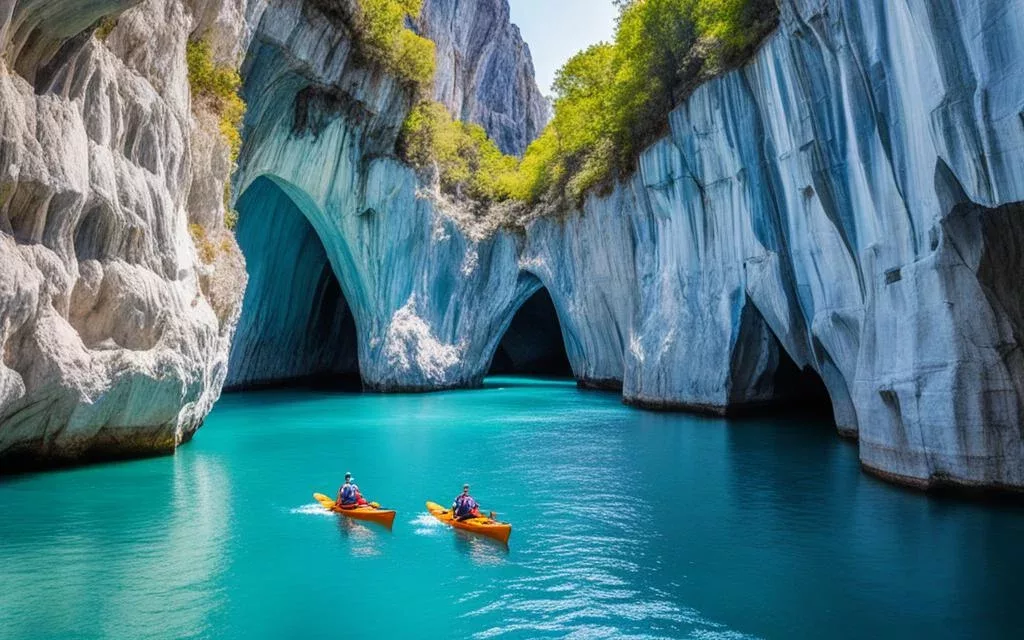
Visiting the Marble Caves in Chile is an amazing experience. You can pick from boat tours or kayaking. Most tours start from Puerto Rio Tranquilo, a beautiful place key to seeing the caves. Here are some tips and insights for your journey.
Safety Considerations
When visiting the Marble Caves, your safety comes first. The weather and water in Patagonia can change fast. So, listening to your tour operator’s safety rules is important. Boat tours are safe for most and last about 1 to 1.5 hours. They cost around $10,000CLP per person, requiring at least five people.
For a bigger thrill, try the kayaking adventures. They take about 3 hours and cost $35,000CLP each. You might get a deal for groups. Don’t forget to wear your life jacket and listen to your guide’s advice.
Photography Tips
Getting great photos of the Marble Caves calls for some tips. Photograph them when the weather is calm. This helps avoid ripples in your shots. Morning light is best for capturing the caves’ vibrant colors.
Using a waterproof camera or case is a good idea. It keeps your gear safe on the water. For more tips and ideas, check out Chile’s Incredible Marble Caves.
| Transport | Cost | Duration |
|---|---|---|
| Night Bus (El Chaltén to Los Antiguos) | 2090ARG | Overnight |
| Bus (Los Antiguos to Chile Chico) | 250ARG | 2 Hours |
| Minivan (Chile Chico to Puerto Rio Tranquilo) | 14,000CLP | 4 Hours |
| Drive (Coyhaique to Puerto Rio Tranquilo) | N/A | 4.5 Hours |
Remember, Puerto Rio Tranquilo doesn’t have ATMs. Make sure to bring enough cash for your expenses. You can find banks in Chile Chico and Coyhaique.
Ecological Impact and Conservation
The Marble Caves in Patagonia are breathtaking and vital for conservation efforts. The rise in visitors makes it key to discuss ecological impacts and support eco-friendly tourism.
Conservation Efforts
Patagonia is central to global efforts for environmental protection. It’s a part of the ’30×30′ initiative, which seeks to guard 30% of the earth’s lands and oceans by 2030. Over 45,000 km² of Chilean Patagonia is protected. This is about 30% of Chile’s protected areas, showing a clear commitment to preserving natural beauty and diversity.
The 2011 CBD Aichi biodiversity goal aimed to protect certain percentages of the earth by 2020. By enlarging protected areas, benefits far outweigh costs by a 5:1 ratio. This underlines the value of conservation efforts.
In Northern Patagonia, traditional extensive ranching is giving way to eco-friendlier options. Things like small farming, eco-tourism, and sustainable fish farming are becoming more popular. This change matches the region’s push for eco-friendly tourism and greater environmental protection.
Not just a local priority, Northern Patagonia is also a research hotspot for nature preservation. Its unique status helps in studying and applying sustainable techniques globally.
“Increasing the coverage of protected areas towards the 30% target is claimed to result in benefits that outweigh the costs by at least 5:1.”
Encouraging eco-friendly tourism in Patagonia includes teaching visitors about the impacts of their actions. The goal is to reduce harm and enhance conservation understanding. This approach helps ensure the Marble Caves of Patagonia remain an awe-inspiring sight for the future.
Read more about these conservation efforts here.
Cultural and Historical Significance
The Marble Caves, or Cuevas de Marmol, are very important in Patagonia, Chile. They are more than just beautiful; they show how nature and people’s traditions are linked. The caves mean a lot to the indigenous people there.
The Cuevas de Marmol are a key part of Patagonia’s beauty and its stories. The local communities see these caves as sacred. The amazing patterns inside the caves are like the earth’s artwork, showing the region’s culture.
Learning about the caves’ past makes visiting them today even more special. The old stories and respect for these places influence how we see and take care of them now. They are a sign of how people and nature can live in harmony.
Efforts to protect the Cuevas de Marmol are underway in Chile. These efforts are to keep the caves beautiful and promote traveling in a way that doesn’t harm them. This way, people later on can still see their beauty and know their important history.
| Aspect | Cultural Significance |
|---|---|
| Indigenous Reverence | Sacred and spiritual significance |
| Modern-Day Importance | Symbol of natural and cultural heritage |
| Conservation Efforts | Maintaining pristine beauty, promoting sustainable tourism |
Marble Caves in Popular Culture
The Marble Caves in Chile are a wonder in popular culture. They catch the eye with their blue swirls and crystal walls. They attract tourists and inspire artists everywhere. Photos of these caves are everywhere in travel books and photo shows. They often show up in famous magazines and guides, making them even more popular.
The caves are hidden away in Chile’s remote beauty. This makes them even more special and mysterious. They are popular on social media and in travel blogs. Adventurers love to talk about their journeys on Lake General Carrera to see the caves.
The Marble Caves mean more than just beauty. They show nature’s incredible work over thousands of years. This makes them interesting for educational films. They also offer a magical setting for movies, adding magic to stories.
There’s a big push to keep the caves safe. Programs work to keep them away from harm caused by too many visitors. This helps make sure they stay untouched for others to see in the future. It shows how important it is to protect our unique natural sites.
Conclusion
The Marble Caves of Patagonia, tucked away in the Andes in Chile, are a wonder like no other. These stunning formations are nature’s artwork, carved out over thousands of years. They greet visitors with walls of marble that shimmer in blues and turquoise.
When you explore the Marble Caves, you do more than see incredible geology. You dive into the region’s rich culture and history, too. Known as Cuevas de Mármol locally, these caves showcase the beauty of nature and the heritage of indigenous people. They remind us of the deep bond we share with the earth.
Keeping the Marble Caves beautiful means we all must work together. With efforts in conservation and responsible tourism, we can ensure they awe people for generations to come. Thus, the Marble Caves stand as a proud symbol of Chile’s natural legacy. They call out to adventurers and nature lovers everywhere.